


Background
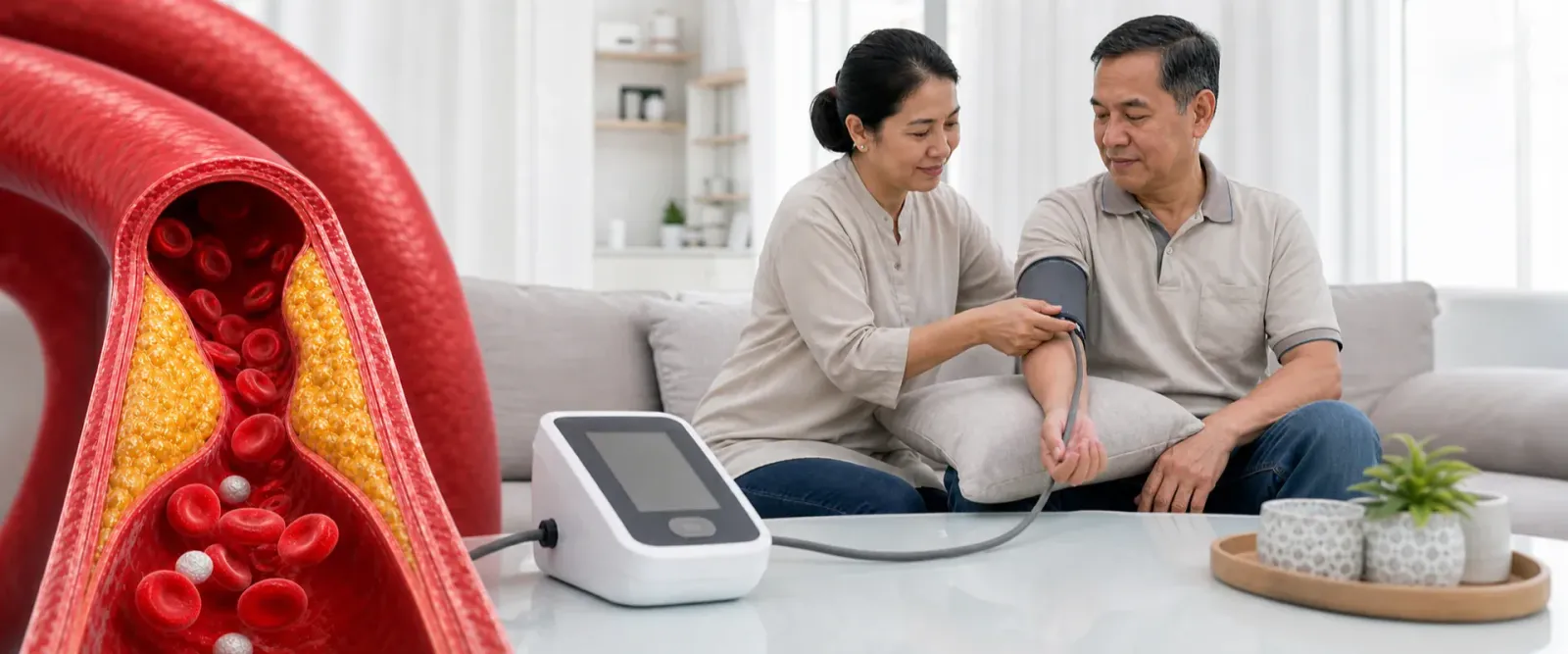
Blood pressure is not one number but a range that moves through the day. A single reading in a clinic captures one moment, often the least relaxed one. Measurements taken at home, with consistent technique and recorded over about a week, describe the range far better and are what most guidelines now ask for when a diagnosis or a treatment change is being considered.
Key points
- Blood pressure varies through the day and should be read in context.
- Consistent technique makes home measurements far more useful.
- Bring the full record, not just the highest or lowest number.
What to look out for
- Measuring immediately after activity, coffee or a cigarette
- A cuff that is the wrong size or worn over clothing
- An unsupported arm, or feet not flat on the floor
- Recording only the readings that look reassuring
- Changing your own medication in response to one number
At a glance
What this means in practice
Five quiet minutes seated removes much of the variation that makes single readings misleading.
Validated upper-arm monitors are generally preferred to wrist or finger devices for home use.
Two readings a minute apart, morning and evening, give a usable average rather than a snapshot.
Editing out the high readings removes exactly the information your clinician needs.
Treatment decisions follow the pattern across a week, never a single measurement.
Evidence summary
Hypertension guidelines recommend out-of-office measurement, including home monitoring over roughly seven days, to confirm a diagnosis and guide treatment, because it identifies white-coat and masked hypertension that a single clinic reading cannot.
References
- Mancia G, et al. 2023 ESH Guidelines for the management of arterial hypertension. J Hypertens. 2023;41(12):1874-2071.
- World Health Organization. Guideline for the pharmacological treatment of hypertension in adults. Geneva: WHO; 2021.
- Kementerian Kesehatan Republik Indonesia. Pedoman pengendalian hipertensi.