


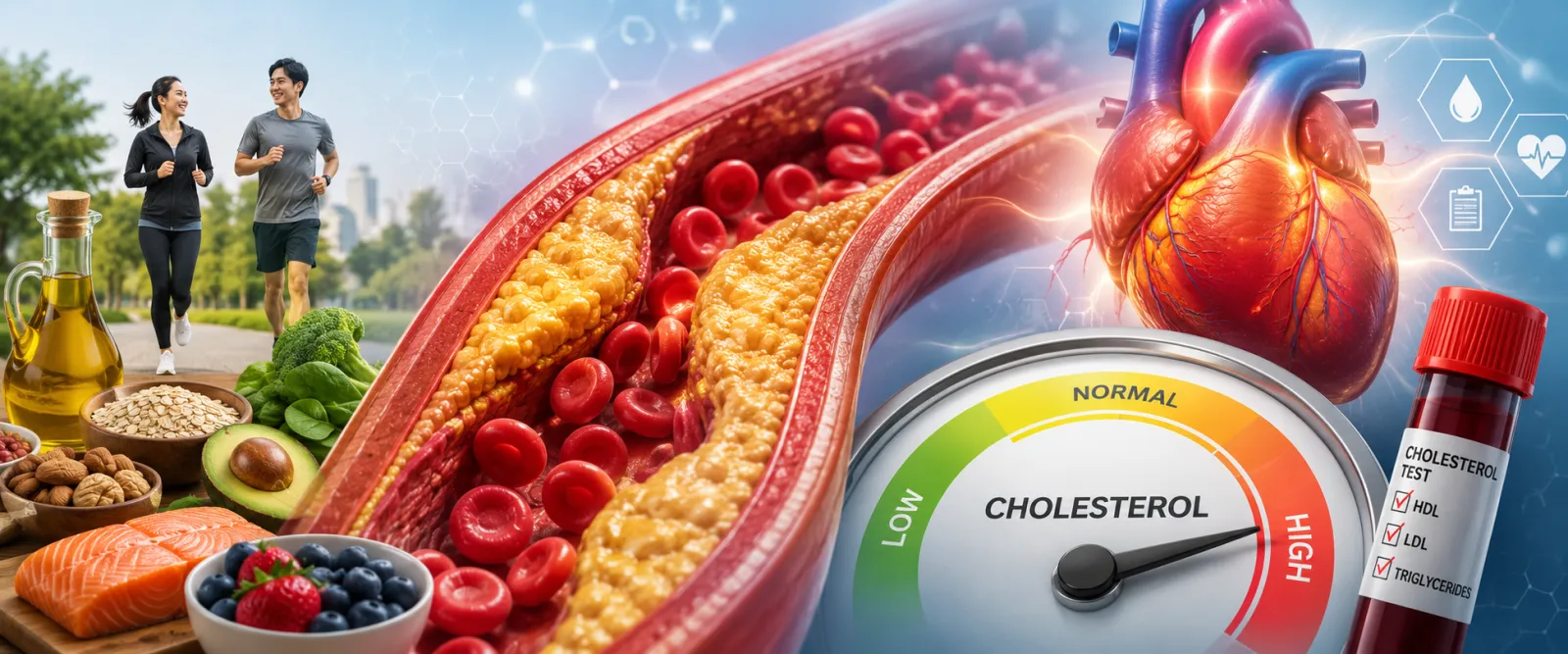
Most people don't find out they have high cholesterol because something feels wrong — they find out because a routine blood test says so. That's exactly what makes it tricky: high cholesterol can quietly damage blood vessels for years before it ever announces itself, sometimes only showing up the day it causes a heart attack or stroke.
This article walks through what high cholesterol actually is, what drives it, how it's identified, and the evidence-based steps — from everyday habits to medication — used to bring it under control.
What Is High Cholesterol?
Cholesterol itself isn't the enemy. Your body needs it to build cell membranes, produce hormones, and digest fat. The issue isn't that cholesterol exists in your blood — it's the type and amount.
Because cholesterol can't dissolve in blood on its own, it travels through the bloodstream packaged inside particles called lipoproteins. The two you'll hear about most:
LDL (low-density lipoprotein) — often called "bad" cholesterol because excess LDL can settle into artery walls and contribute to plaque buildup.
HDL (high-density lipoprotein) — the "good" cholesterol, which helps carry excess cholesterol back to the liver for disposal.
There's also triglycerides, another type of blood fat that, when elevated, adds to cardiovascular risk, and total cholesterol, the sum of all of the above.
LDL gets particular attention in medicine because of its role in atherosclerosis[^atherosclerosis] — the gradual buildup of fatty plaque inside artery walls that narrows and stiffens blood vessels over time. Genetic, epidemiological, and randomized trial evidence converges on the same conclusion: LDL-C isn't just a marker sitting alongside heart disease, it's a causal factor in atherosclerotic cardiovascular disease (ASCVD)[1] .That's the core reason keeping LDL in check is such a central pillar of cardiovascular prevention.
What Causes High Cholesterol?
High cholesterol is rarely the result of one single thing — it's usually a mix of habits, biology, and sometimes genetics.
Diets high in saturated fat (fatty cuts of meat, butter, full-fat coconut products, fried foods) and trans fats (found in some processed and packaged foods) tend to raise LDL. Diets low in fiber and high in refined carbohydrates and calories also contribute to an unfavorable lipid profile.
A sedentary lifestyle is associated with lower HDL and a generally less favorable lipid profile.
Excess body fat, particularly visceral fat around the abdomen, is closely linked to higher LDL and triglycerides and lower HDL.
For some people, high cholesterol isn't primarily about lifestyle at all. Familial hypercholesterolemia (FH) is a genetic condition that causes markedly elevated LDL from a young age — even in people who eat well and maintain a healthy weight.
The body's ability to clear cholesterol tends to decline with age, and hormonal shifts — such as after menopause — can also affect the lipid profile.
Type 2 diabetes, chronic kidney disease, hypothyroidism, and certain liver conditions are known to affect lipid metabolism.
Some drug classes, such as corticosteroids or certain medications used for other chronic conditions, can affect cholesterol levels as a side effect.
Modifiable vs. non-modifiable risk factors: diet, physical activity, weight, and smoking are all things you can change. Age, sex, and genetic history are not — but they still matter, because they influence how aggressively a person's cholesterol needs to be managed.
What Are the Symptoms of High Cholesterol?
This is where a lot of confusion comes from: high cholesterol typically has no distinctive symptoms. Most people with elevated cholesterol feel completely fine and only discover it through a routine blood test.
Popular claims like "a stiff or heavy neck means high cholesterol" aren't well supported by evidence and shouldn't be relied on as a warning sign. That kind of discomfort is far more commonly linked to things like muscle tension, poor sleep, or high blood pressure.
In rare, longstanding, and extreme cases — such as untreated familial hypercholesterolemia — physical signs can appear, like xanthomas (fatty deposits under the skin, often near tendons) or xanthelasma (yellowish patches around the eyelids). These aren't typical for most people with high cholesterol, though.
Because it's so often silent, regular lipid profile testing — not waiting for symptoms — is the reliable way to know where your cholesterol actually stands.
How Is High Cholesterol Diagnosed?
The only reliable way to know your cholesterol status is a blood test called a lipid profile, which typically measures:
Total cholesterol
LDL-C
HDL-C
Triglycerides
One important nuance: an LDL number rarely stands on its own. Guidelines from the European Society of Cardiology (ESC) and European Atherosclerosis Society (EAS) are clear that the LDL target a person should aim for depends on their overall cardiovascular risk, not the LDL value in isolation.[1] In practice, this means someone with only mildly elevated LDL but several other risk factors (diabetes, hypertension, a family history of early heart disease, smoking) may need more aggressive management than someone with similar LDL but no other risk factors.
Because of this complexity, interpreting a lipid profile is best done with a physician who can weigh your overall risk profile — not simply by comparing numbers to the "normal range" printed on a lab report.
How to Lower Cholesterol Naturally
Lifestyle change is the foundation of cholesterol management, whether as a standalone approach or alongside medication when needed.
Some evidence-supported dietary strategies include:
Cutting back on saturated and trans fats
Increasing soluble fiber intake
Eating more fish, vegetables, fruit, and whole grains in place of refined carbohydrates.
Limiting ultra-processed foods that are calorie-dense but nutritionally poor.
Regular aerobic activity — brisk walking, cycling, or swimming for at least 150 minutes a week at moderate intensity — is associated with improvements in lipid profile, including potential increases in HDL, alongside its broader cardiovascular benefits.
Weight loss in people who are overweight or living with obesity is generally followed by improvements in LDL, triglycerides, and HDL, along with a reduction in overall cardiovascular risk.
Smoking doesn't just affect the lipid profile (it tends to lower HDL) — it independently accelerates atherosclerosis. Quitting is one of the single highest-impact interventions for lowering cardiovascular risk overall.
Excess alcohol intake is linked to higher triglycerides and blood pressure. Importantly, there is no recommendation to start drinking alcohol for health benefits — non-drinkers shouldn't start. For people who already drink, limiting intake is the medically relevant step.
Worth emphasizing: no single "miracle food" lowers cholesterol on its own overnight. The effect is cumulative and depends on a consistent overall dietary pattern, not occasional healthy choices.
When Is Lifestyle Change Not Enough?
Lifestyle modification is the foundation everyone with high cholesterol should build on. But for certain groups, lifestyle change alone often isn't enough to reach a safe LDL target, and pharmacological therapy needs to be considered. This generally includes people with:
Markedly elevated LDL-C
Established atherosclerotic cardiovascular disease (ASCVD)
Diabetes, particularly with organ damage or additional risk factors
Chronic kidney disease
Familial hypercholesterolemia
High to very high overall cardiovascular risk based on a comprehensive assessment
The decision to start medication is individual and should be made in discussion with a physician, since it weighs many factors together — not a single LDL number. This article isn't a substitute for that clinical judgment.
Medications for High Cholesterol
When pharmacological therapy is needed, several well-studied drug classes are available.
Statin
Statins work by inhibiting HMG-CoA reductase, an enzyme in the liver involved in cholesterol production. By blocking this enzyme, the liver produces less cholesterol and increases its uptake of LDL from the bloodstream, lowering LDL levels. Statins are first-line therapy for most patients who need lipid-lowering treatment and are the most extensively studied drug class in cardiovascular prevention. A pooled analysis of individual data from over 170,000 participants across 26 randomized trials found that each 1 mmol/L (about 38.7 mg/dL) reduction in LDL-C achieved with statin therapy was associated with roughly a one-fifth relative reduction in major cardiovascular events, a benefit seen consistently across patient groups with no evidence of a threshold below which the benefit disappears.[2]
Ezetimibe
Ezetimibe works differently from statins — it reduces cholesterol absorption in the intestine. It's typically used as add-on therapy for patients who haven't reached their LDL target with a statin alone, or in situations where statins aren't well tolerated, at a physician's discretion.
Other LDL-Lowering Therapies
Beyond statins and ezetimibe, other drug classes (such as PCSK9 inhibitors) may be considered in specific situations — particularly when LDL targets aren't met with standard therapy, or in very high cardiovascular risk. Choosing among these options is entirely a matter of clinical judgment by the treating physician.
Important note: this article is educational and isn't intended to recommend a specific drug, replace a prescription, or suggest stopping any medication you're currently taking. Treatment decisions should always be made in consultation with a healthcare provider who understands your full health picture.
Can High Cholesterol Be Lowered Without Medication?
The honest answer: it depends. For some people — particularly those with only mildly elevated LDL and low-to-moderate overall cardiovascular risk — improvements in diet, physical activity, and body weight can meaningfully improve the lipid profile without medication.
But for people with very high LDL, high or very high cardiovascular risk, or conditions like familial hypercholesterolemia, lifestyle change alone often isn't enough to reach a safe LDL target — so medication remains necessary alongside, not instead of, a healthy lifestyle. Ideally, the two work together rather than one replacing the other.
Foods That Help Lower Cholesterol
Food Group | Examples | Potential Benefit |
Soluble fiber | Oats, barley, kidney beans, apples, pears | May help lower LDL by binding cholesterol in the digestive tract[3] |
Nuts | Almonds, walnuts, peanuts | Rich in omega-3 fatty acids |
Fatty fish | Salmon, mackerel, sardines | Alternative to saturated fat |
Unsaturated plant oils | Olive oil, canola oil | Source of fiber and antioxidants, low in saturated fat |
Fruits and vegetables | Broccoli, carrots, oranges, avocado | Higher fiber than refined carbohydrates |
Whole grains | Brown rice, whole wheat, quinoa | Rich in omega-3 fatty acids |
Foods to Limit
This is general guidance, not an absolute ban list. Occasional, moderate intake is a different context from routine, excessive consumption.
Food Type | Examples | Why It Matters |
|---|---|---|
High in saturated fat | High in saturated fat | Associated with higher LDL |
Containing trans fat | Containing trans fat | Raises LDL, lowers HDL |
Ultra-processed foods | Ultra-processed foods | High calorie, low nutrient density, promotes weight gain |
Excess added sugar and refined carbs | Excess added sugar and refined carbs | Associated with higher triglycerides |
When Should You See a Doctor?
- Get lab results showing very high LDL or total cholesterol
- Have diabetes
- Have chronic kidney disease
- Have a history of cardiovascular disease (e.g., a previous heart attack or stroke)
- Have a family history of early heart disease (before age 55 in men or 65 in women)
- Suspect familial hypercholesterolemia (e.g., very high LDL from a young age, or multiple family members with high cholesterol or early heart disease)
- Have made consistent lifestyle changes but your LDL remains elevated
A doctor can assess your overall cardiovascular risk and determine the management approach best suited to your situation.
FAQ
1. What are the signs of high cholesterol?
High cholesterol usually doesn't cause distinctive physical signs. Most people only find out through a blood test (lipid profile), not from how their body feels.[1]
2. Can high cholesterol cause headaches?
High cholesterol itself doesn't typically cause headaches directly; headaches are more often linked to conditions like high blood pressure. That said, long-term high cholesterol contributes to atherosclerosis, which can affect blood flow — so recurring headaches are still worth having checked by a doctor.
3. Bagaimana cara mengetahui kolesterol tinggi?
The only reliable method is a lipid profile blood test, which measures total cholesterol, LDL, HDL, and triglycerides.
4. Can high cholesterol be lowered without medication?
For people with mildly elevated LDL and low cardiovascular risk, yes — through diet, exercise, and weight management. For those with very high LDL or high risk, medication is usually still needed.[1]
5. What foods help lower cholesterol?
Foods rich in soluble fiber (oats, legumes, fruit), fatty fish, and unsaturated plant oils are associated with improved lipid profiles when eaten consistently as part of a healthy diet.[3]
6. What foods should be avoided with high cholesterol?
Foods high in saturated fat, trans fat, and ultra-processed foods should generally be limited, as they're associated with higher LDL.
7. What is a normal LDL level?
There's no single "normal" LDL target for everyone — the ideal target depends on a person's overall cardiovascular risk, which is why it should be determined together with a doctor.[1]
8. When does high cholesterol require medication?
Generally considered for people with very high LDL, existing cardiovascular disease, diabetes, chronic kidney disease, familial hypercholesterolemia, or high/very high overall cardiovascular risk — a decision made by a physician.[1]
9. Can exercise lower cholesterol?
Regular physical activity is associated with an improved lipid profile, including potential increases in HDL, alongside broader cardiovascular benefits.
10. Is high cholesterol dangerous?
Uncontrolled high cholesterol over time increases the risk of atherosclerosis, which can lead to coronary heart disease and stroke.[1][2]
11. Can thin people have high cholesterol?
Yes. Body weight isn't the only factor — genetics, diet, and other medical conditions also play a role, so people at a normal weight can still have high cholesterol.
12. How often should cholesterol be checked?
The ideal frequency varies by age and individual risk factors; adults are generally advised to have periodic checks, and the right schedule is best discussed with a doctor.
References
- Mach F, Baigent C, Catapano AL, Koskinas KC, Casula M, Badimon L, et al. 2019 ESC/EAS Guidelines for the management of dyslipidaemias: lipid modification to reduce cardiovascular risk. European Heart Journal. 2020;41(1):111–188. DOI: 10.1093/eurheartj/ehz455. https://doi.org/10.1093/eurheartj/ehz455
- Cholesterol Treatment Trialists' (CTT) Collaboration (Baigent C, Blackwell L, Emberson J, et al.). Efficacy and safety of more intensive lowering of LDL cholesterol: a meta-analysis of data from 170,000 participants in 26 randomised trials. The Lancet. 2010;376(9753):1670–1681. DOI: 10.1016/S0140-6736(10)61350-5. PMID: 21067804.
- Ghavami A, Ziaei R, Talebi S, Barghchi H, Nattagh-Eshtivani E, Moradi S, et al. Soluble Fiber Supplementation and Serum Lipid Profile: A Systematic Review and Dose-Response Meta-Analysis of Randomized Controlled Trials. Advances in Nutrition. 2023;14(3):465–474. DOI: 10.1016/j.advnut.2023.01.005.
Disclaimer
This article is written for general educational purposes and is not a substitute for professional medical consultation, diagnosis, or prescription. Any treatment decision should always be discussed with the healthcare provider managing your specific condition.