


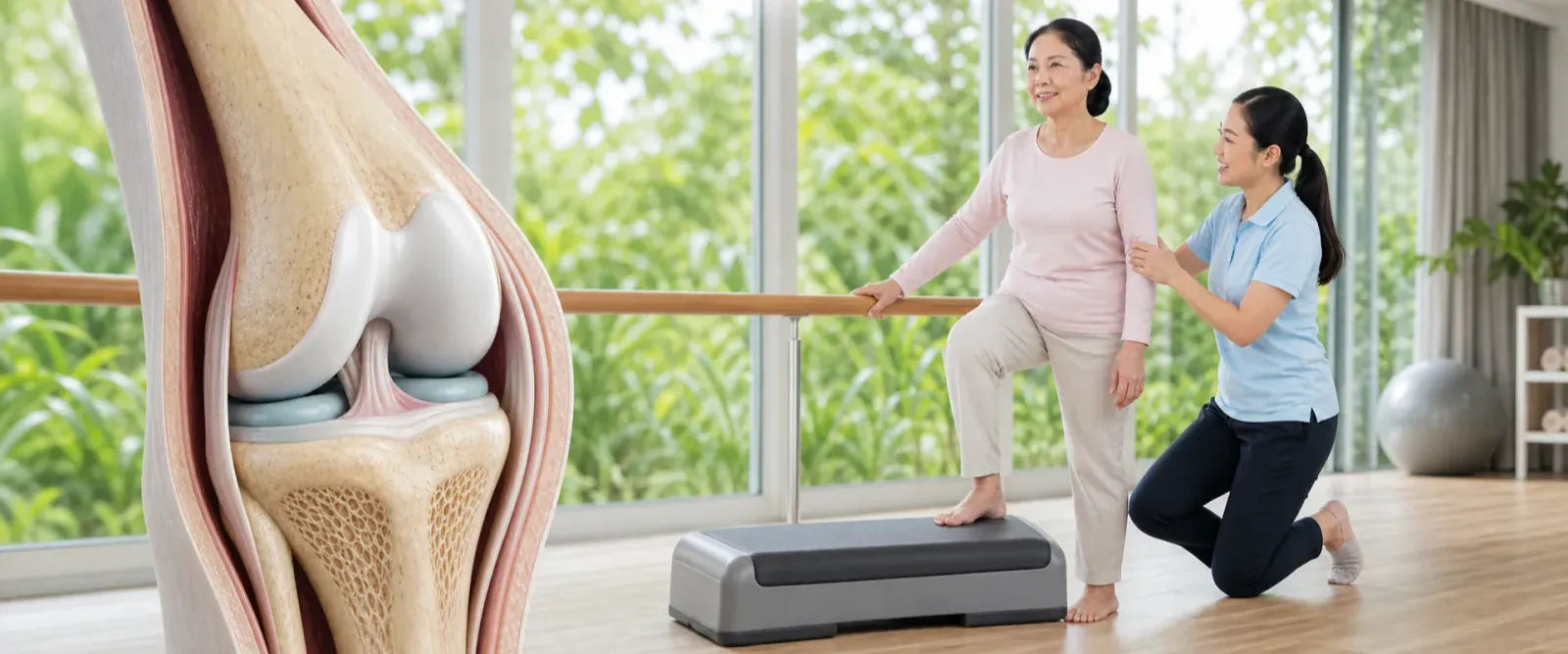
Background
Stiff or aching joints make people move less, and moving less usually makes the stiffness worse. Breaking that cycle rarely requires intense exercise. What tends to help is regular, moderate movement built up slowly enough that the following day is manageable, combined with attention to the load a joint carries.
Key points
- Regular movement generally helps joint stiffness rather than worsening it.
- Build up gradually and judge by how the next day feels.
- New, severe or one-sided joint symptoms should be assessed.
What to look out for
- A hot, swollen or red joint
- Joint pain following a significant injury
- Fever alongside joint symptoms
- Morning stiffness lasting more than an hour
- Pain that consistently wakes you at night
At a glance
What this means in practice
Several short sessions are usually better tolerated than one long one.
Walking, cycling and water-based activity load joints less while still building capacity.
Stronger muscles around a joint share the load that the joint would otherwise carry alone.
Some discomfort during activity is common; pain that lingers into the next day means you progressed too fast.
A hot, swollen joint or fever is a reason to seek assessment rather than to push through.
Evidence summary
Osteoarthritis guidance places therapeutic exercise and weight management as core treatments for all patients, alongside education and self-management support, with pharmacological options considered as adjuncts rather than replacements.
References
- National Institute for Health and Care Excellence. Osteoarthritis in over 16s: diagnosis and management. NICE guideline NG226.
- World Health Organization. Physical activity fact sheet.
- Kolasinski SL, et al. American College of Rheumatology guideline for the management of osteoarthritis.