


Background
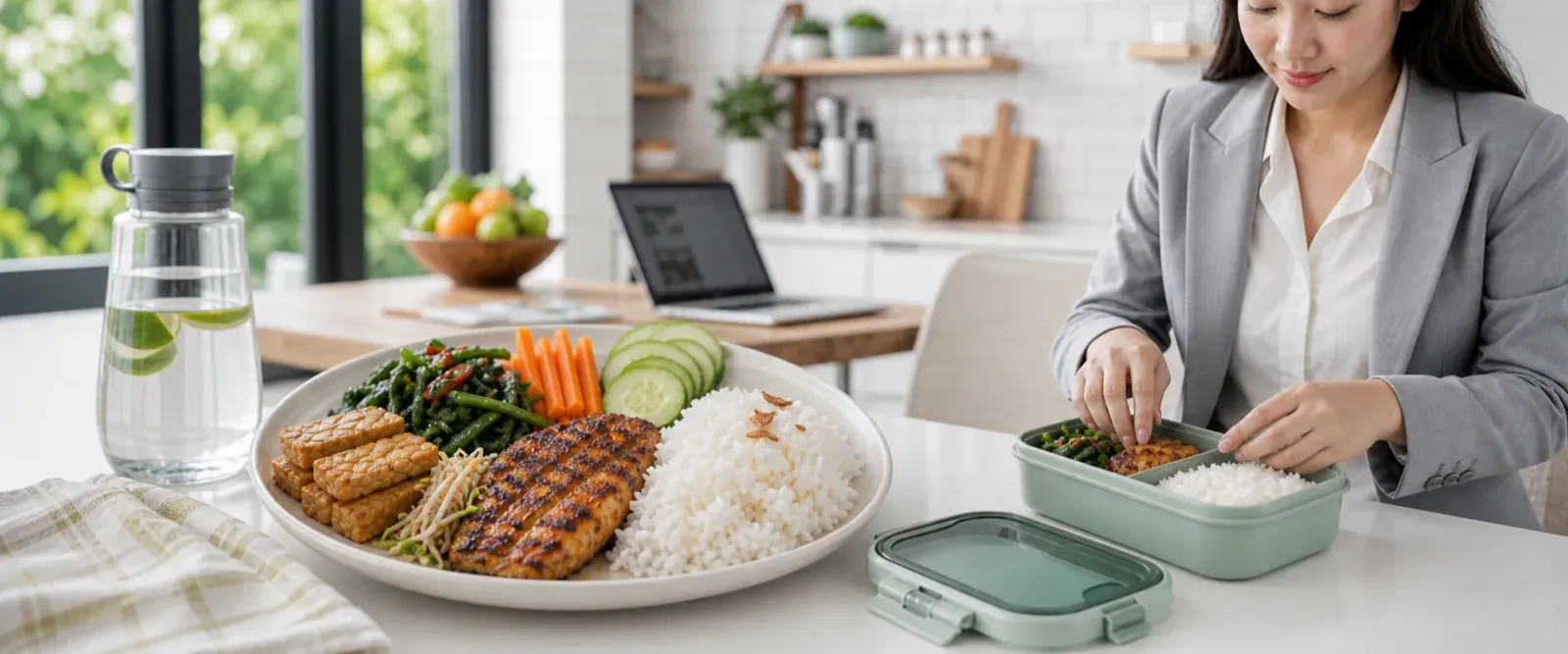
Most people do not need a new diet so much as a rule that survives a busy Tuesday. Dividing the plate by proportion rather than counting anything is that kind of rule: it works at home, in a canteen and at a family meal, and it does not require you to know the numbers behind what you are eating.
Key points
- Proportions are easier to sustain than counting.
- The same rule works at home, at work and when eating out.
- Individual needs vary; specific advice belongs with a professional.
What to look out for
- Skipping meals and compensating later in the day
- Drinks that carry more sugar than the meal itself
- Very large single portions of refined carbohydrate
- Little vegetable or fruit across a whole day
- Eating while working, without noticing quantity
At a glance
What this means in practice
Proportions on a plate are quick to judge and need no equipment or labels.
Filling that half first tends to right-size the rest of the plate without effort.
Sweetened drinks are the easiest source of extra sugar to remove.
A single easy option you can always make protects the days when planning fails.
Attention to the meal is what makes portion size self-correcting.
Evidence summary
Dietary guidance from major public health bodies converges on higher intake of vegetables, fruit, legumes and wholegrains, with limited free sugars and salt, and consistently favours sustainable everyday patterns over restrictive short-term diets.
References
- World Health Organization. Healthy diet fact sheet. Geneva: WHO.
- Kementerian Kesehatan Republik Indonesia. Pedoman Gizi Seimbang.
- World Health Organization. Guideline: sugars intake for adults and children.