


Disease overview
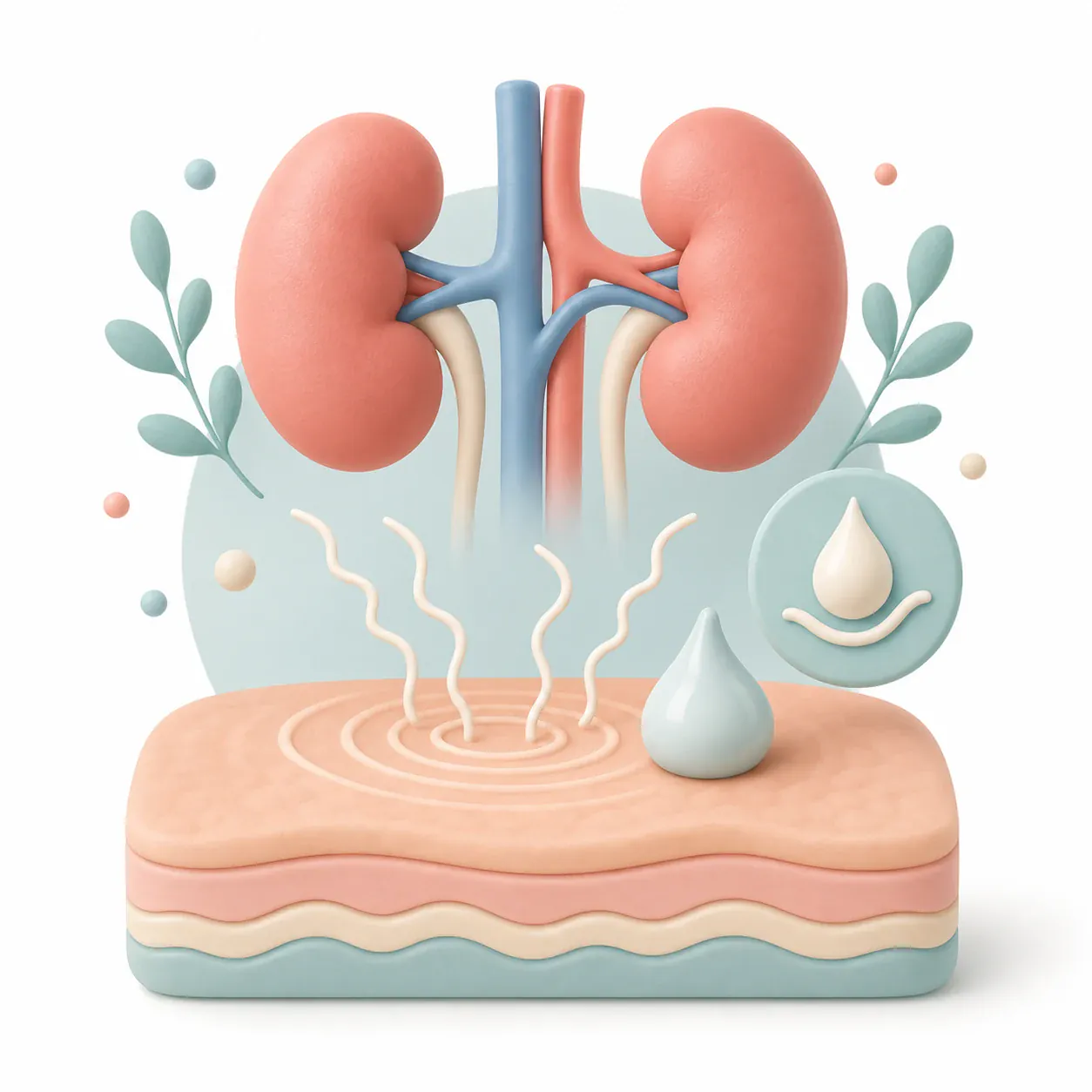
CKD-aP can range from intermittent irritation to severe, widespread itch that disrupts sleep, mood, concentration and dialysis sessions. It often affects both sides of the body and may involve the back, arms, head or the arm with vascular access. Reporting the pattern and impact is important because clinicians may underestimate symptom burden and effective care usually requires more than one approach.
It includes:
- Persistent itch in non-dialysis CKD
- Haemodialysis- or peritoneal dialysis-associated itch
- Sleep, mood and quality-of-life effects
Pathophysiology
No single mechanism explains CKD-aP. Current evidence points to interacting changes in immune signalling, peripheral nerves and opioid receptors, together with dry skin and the accumulation of substances not fully removed as kidney function declines. Mineral and bone disorder, inadequate dialysis and inflammation may contribute in some people, but a laboratory value alone does not confirm the diagnosis.
Disease pathway
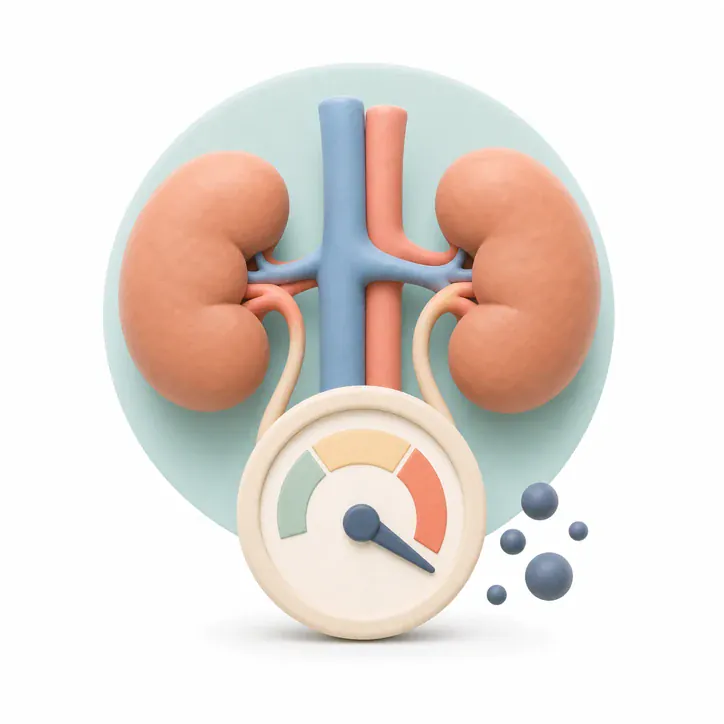 Reduced kidney clearance
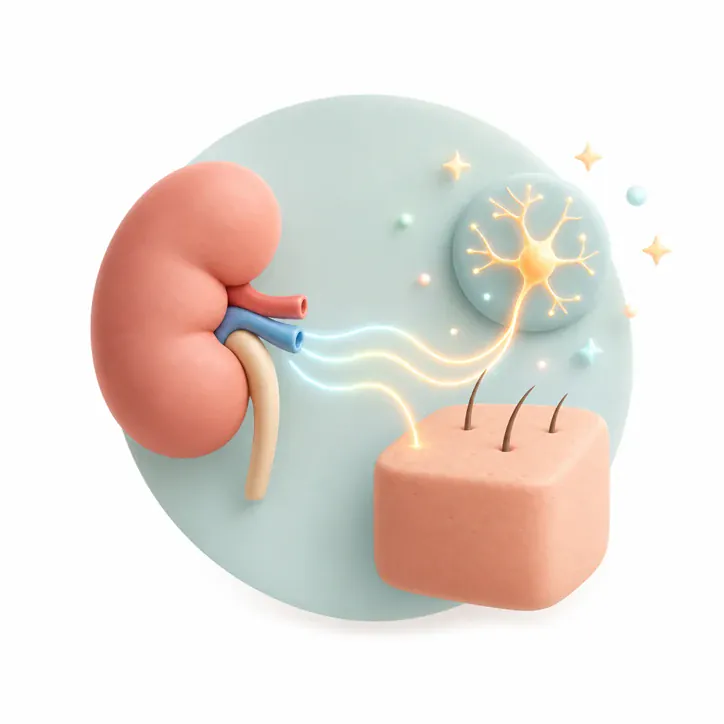 Immune and nerve signalling
 Itch–sleep cycle
 Assessment and tailored care
Common symptoms
Risk factors
Assessment
Diagnosis starts with the person’s description of itch. The clinician examines the skin, reviews medicines and dialysis, and looks for dermatological, liver, thyroid, haematological, neurological or allergic causes. A symptom scale can document severity and response over time; blood tests are selected according to the clinical picture.
Assessment pathway
Management
Management is individualized and often combines skin care, optimization of kidney treatment and medicines that act on itch signalling. Treatment choice depends on kidney function, dialysis status, other medicines, fall risk and local availability. Sedating antihistamines may help sleep in selected cases but CKD-aP is not primarily a histamine-driven condition.
Management approach
References
- National Kidney Foundation. Chronic Kidney Disease-Associated Pruritus fact sheet.
- National Kidney Foundation. Pruritus (Itchy Skin), reviewed 2026.
- Kidney Disease: Improving Global Outcomes. KDIGO 2024 Clinical Practice Guideline for the Evaluation and Management of Chronic Kidney Disease.
- Sukul N, et al. Pruritus in Hemodialysis Patients: Longitudinal Associations with Clinical and Patient-Reported Outcomes. American Journal of Kidney Diseases. 2023.