

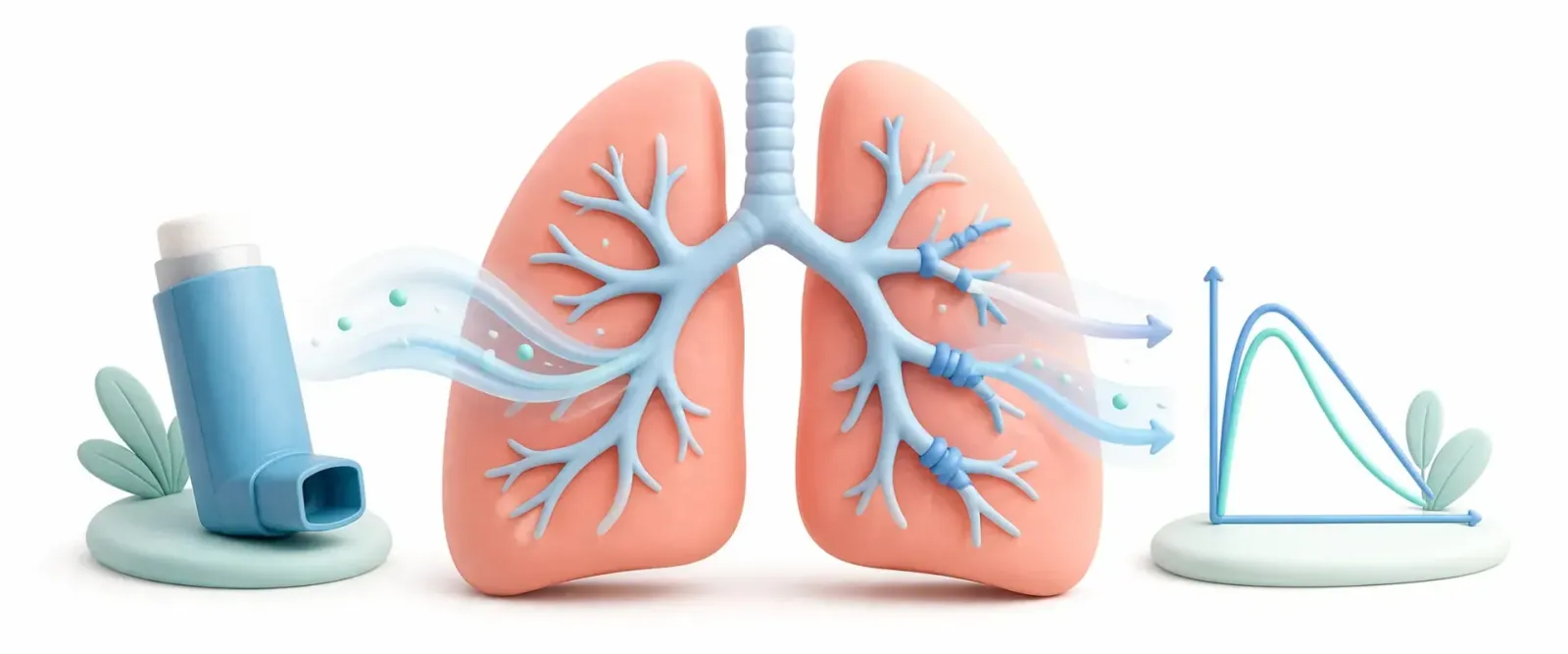
Disease overview
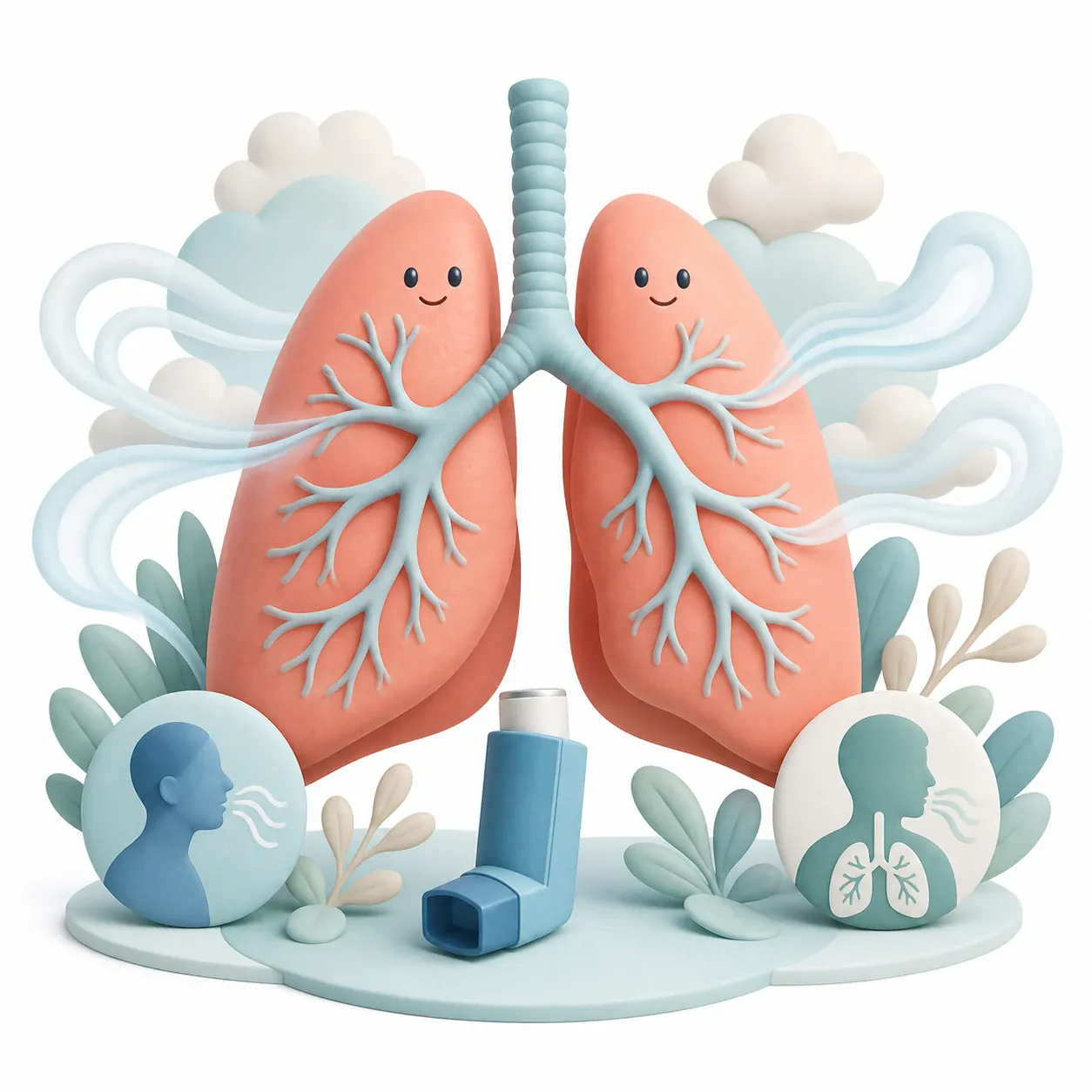
Asthma is a chronic inflammatory airway disease that can affect any age group. Symptoms often vary over time and may be triggered by viral infections, allergens, exercise, weather or irritants. COPD most often develops after long-term exposure to tobacco smoke, household or occupational pollutants and usually becomes more noticeable in mid-to-later life. A diagnosis should not be made from symptoms alone.
It includes:
- Asthma with variable respiratory symptoms
- COPD, including chronic bronchitis and emphysema
- People with clinical features of both conditions
Pathophysiology
In asthma, airway inflammation and tightening of the muscles around the airways cause narrowing that can improve spontaneously or with treatment. In COPD, chronic inflammation, small-airway remodelling and loss of elastic recoil lead to airflow limitation that is not fully reversible. Exacerbations are episodes of acute worsening, commonly triggered by infection or environmental exposure, and can accelerate loss of health and require urgent treatment.
Disease pathway
 Triggers and exposure
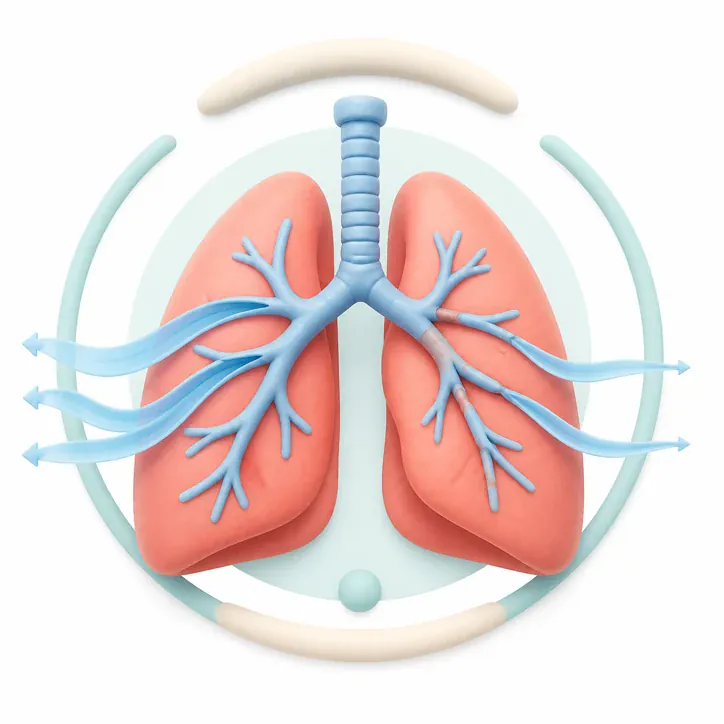 Airflow limitation
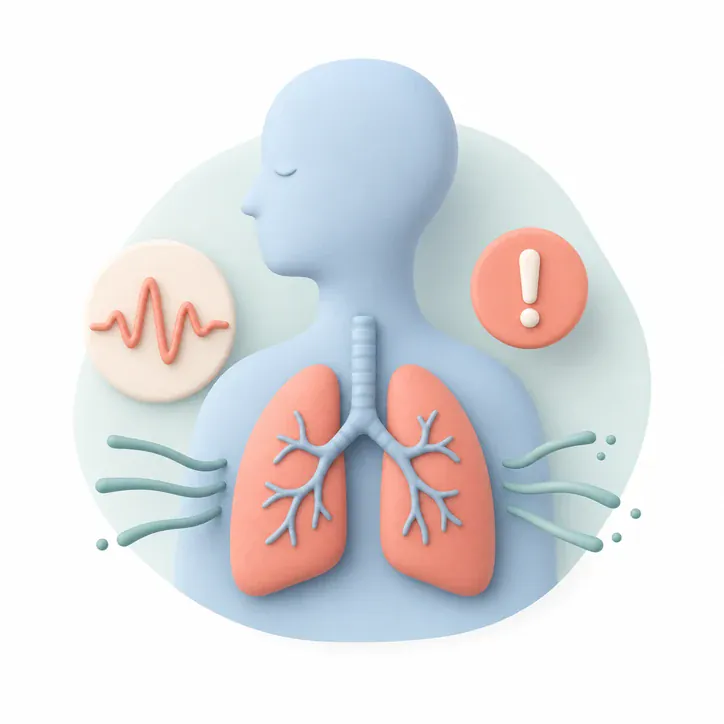 Symptoms and flare-ups
 Assessment and long-term care
Common symptoms
Risk factors
Assessment
A clinician distinguishes asthma from COPD by combining the symptom pattern and exposure history with objective evidence of airflow limitation. Spirometry is central to COPD diagnosis and is commonly used with bronchodilator testing when asthma is suspected. Other tests may be selected to rule out alternative causes or define the type and severity of disease.
Assessment pathway
Management
Treatment depends on the confirmed diagnosis, symptom burden, exacerbation risk and other health conditions. Inhaled medicines are central to both conditions, but the medicine combinations and goals differ. Asthma treatment should include an inhaled corticosteroid-containing strategy; COPD treatment commonly uses long-acting bronchodilators, with inhaled corticosteroids reserved for selected people.
Management approach
References
- Global Initiative for Asthma. Global Strategy for Asthma Management and Prevention, 2025.
- Global Initiative for Chronic Obstructive Lung Disease. Global Strategy for Prevention, Diagnosis and Management of COPD, 2026.
- World Health Organization. Asthma fact sheet, updated 28 April 2026.
- World Health Organization. Chronic obstructive pulmonary disease fact sheet, updated 10 June 2026.